1744 Fry Rd., Houston, TX 77084

Existing Patients: (281) 492-8900

New Patients: (281) 213-5048

Dentista de habla hispana

FAQs

I want to straighten my teeth but I don't want metal braces. What are the alternatives?

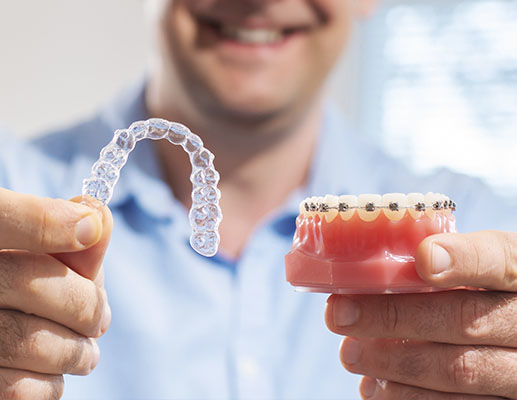
There are many options for patients who want to avoid metal braces! The most popular alternative orthodontic treatment is Invisalign®, which are clear plastic aligners designed to straighten teeth. After an examination of your teeth, your dentist will determine which option is best suited to your wants and needs.

Is Invisalign® expensive?

According to the Invisalign® website, the cost for treatment is approximately the same as the cost for metal braces. A portion of this cost may be covered by your insurance. Please call us to set up a consultation and discuss potential payment plan options.

How does Invisalign® work?

The first step is to schedule a consultation with your doctor, so they can devise a treatment plan that is best suited to your individual dental needs. Once approved, you will receive your first set of aligners. Your doctor will then regularly monitor the movement of your teeth and new aligners will be ordered according to the progress made in your treatment plan.

Briter Dental
Briter Dental

What is Invisalign® made of?

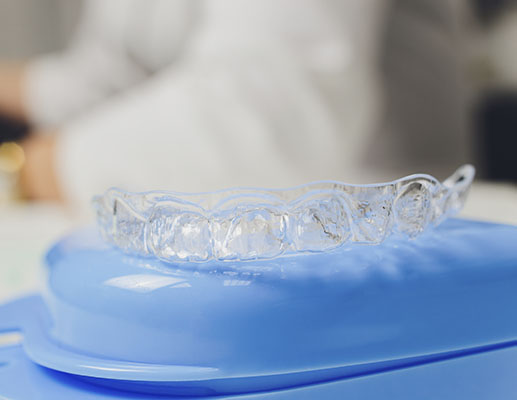
Invisalign® aligners are made of clear, flexible plastic. The company received a patent for this material – SmartTrack® – to be used exclusively for Invisalign® treatment purposes. These aligners are FDA approved and nearly invisible!

How long does Invisalign® treatment take?

Your doctor will give you an estimate regarding how long your Invisalign® treatment should take, which will depend on your specific needs. The average length of time for treatment is approximately 12-18 months. However, some patients may see results far sooner. Remember to wear your aligners exactly as instructed by your doctor to obtain the best results.

Are Invisalign® results permanent?

Your doctor will most likely recommend that you wear retainers following your Invisalign® treatment. This is a precaution that will prevent your teeth from shifting back to their original positioning. It is important to follow your doctor's instructions exactly to ensure long-lasting results.

How often must I wear my aligners?

You must wear your aligners for up to 22 hours daily. You may remove them for eating, drinking and regular oral hygiene.

Are there any restrictions to what I can eat while in treatment?

No. Unlike braces, you may eat whatever you like as long as you remove the aligners before eating. Prior to placing the aligners back on, it is important to brush your teeth and the aligners after you eat.

Will wearing the aligners affect my speech?

Like any orthodontic treatment, there is a short adjustment period. The more you speak with the aligners on, the quicker you will adjust.

Briter Dental
Briter Dental

Is there any discomfort with Invisalign® treatment?

There will be some pressure and minor discomfort for a day or two after each initial insertion. This is a sign that your teeth are moving sequentially into their final position.

Can I chew gum?

It is recommended that you remove your aligners prior to chewing gum as the gum will stick to the aligners.

Can I smoke with the aligners in?

We discourage smoking with aligners as the cigarette smoke will tend to discolor them.

How do I keep my aligners clean?

Brushing them with toothpaste will keep them fresh and clean.

How often do I see an orthodontist while wearing Invisalign®?

Regular office visits are every five to six weeks. This will ensure that your Invisalign® treatment is progressing as planned.

What happens after my treatment is complete? Do I need retainers?

All orthodontic patients are instructed to wear their retainers at night indefinitely. Sleeping with your retainers in at night will ensure a healthy bite and maintain the new position of your teeth.

Does Invisalign® work for kids?

Yes, if their teeth, including second molars, have grown in completely.

Frequently Asked Questions

How often should I see a dentist?

+

You should see your dentist for regular check ups once every six months, which is two times a year. Some patients may need to make more frequent trips to see the dentist based on their specific needs, depending on their overall health, severity of gum disease, and dental goals. Your dentist will review your treatment plan with you and determine an appropriate frequency of visits.

How often should I brush my teeth?

+

You should brush your teeth a minimum of two times daily and also floss once daily. Depending on your dental needs, your dentist may recommend that you brush or rinse more frequently. Maintaining proper home care is imperative to healthy teeth and gums and healthy smiles! Your dentist will review key concepts with you at your cleaning visit and answer any questions you may have regarding your progress from visit to visit.

What is tooth decay?

+

Tooth decay is when the structure of a tooth is destroyed due to the accumulation of plaque on the tooth surface. Plaque begins as a sticky film of biomaterial and is where bacteria thrive on sugar and produce acid byproducts. These byproducts begin softening the tooth enamel and destroy the tooth, causing sensitivity, pain, gum disease, and possible tooth loss.

It is important to see your dentist regularly for check ups and cleanings in order to maintain healthy teeth and gums!

What will happen at my first visit and how long will it take?

+

At Briter Dental, we emphasize the fact that each patient is unique and has very specific needs. We put special care in creating a treatment plan that is customized to your dental needs and goals, which is why the first appointment is so very important.

At your first visit, you will be requested to present your insurance information, fill out patient forms, and review privacy practice documents. You can speed up this process by downloading the forms on our website and bringing them with you to your first visit.

Next, radiographs or “xrays” are taken to provide the diagnostic tools for your dentist to combine with the clinical examination.

Your dentist will complete your exam, review your treatment options, and answer any questions you may have regarding the dental procedures. This process on average takes approximately 45 minutes to an hour.

At Briter Dental, we are dedicated to providing each patient with the most comprehensive, comfortable experience possible. We believe this is primarily achieved through a thorough patient interview and patient education at the very first dental appointment! We look forward to meeting you and your family!

How do I know if you take my insurance?

+

We take most insurance plans at Briter Dental. The easiest way to find out what your coverage is and the details of your plan is to call us today!

Why should I see my dentist every six months for regular check ups?

+

It is important to see your dentist every six months for regular check ups for several reasons. Regular appointments allow your dentist to detect early signs of problems with your teeth and gums, which can reduce the chance of needing more advanced treatments. Also, prevention and/or maintenance of gum disease can help your smile stay healthy and happy.

What is the best toothpaste to use?

+

This is a very commonly asked question by many patients. There are many products on the market, but ultimately the best toothpaste for you is the one you like to use and enjoy most.

Some products have various flavors (such as bubble gum or berry), which can be enticing to young patients, while adults tend to appreciate minty flavored toothpastes. The only key concept to be considered is that you make sure your toothpaste contains fluoride. Whitening toothpastes should be used cautiously if you have sensitivity on your teeth, as they may contain peroxides or abrasive particles that may make your teeth more sensitive.

In keeping your teeth clean between professional cleanings, it is important to use the proper brushing techniques, as reviewed with your dental healthcare professional.

Why do my gums bleed when I brush my teeth?

+

There are several possible reasons why your gums may bleed when you are brushing. It may be due to any of the following: poor oral hygiene, lack of a regular cleaning by a dentist or hygienist, systemic diseases (ie. Diabetes, cancer), medications, ill-fitting restorations that trap bacteria, misaligned teeth, active infections, and/or fractured teeth. Of these reasons, the most common reason is plaque accumulation along the gum line. Plaque itself has bacteria in it, and thus causes inflammation and bleeding when hygiene is not maintained.

Your dentist will be happy to review your health history, hygiene, and proper brushing techniques. Schedule an appointment today to start smiling ‘briter!’

What is a dental radiograph?

+

A dental radiograph, commonly referred to as an “x-ray film,” is a picture of the teeth, bones, and other tissues in the mouth and jaws. Your dentist will use the radiographs to detect decay, gum disease, cancerous masses, changes in bone levels, and possible infections. The number of radiographs per patient may vary, depending on the number of teeth and the condition of the mouth.

How many teeth are there in an adult's mouth?

+

Most adults have thirty two permanent teeth, including the third molars or “wisdom” teeth.

How many teeth are there in a child's mouth?

+

Most children have twenty primary or “baby” teeth.

What is orthodontics?

+

Orthodontics is a specialty in dentistry that focuses on the prevention, diagnosis, and treatment of misaligned teeth and jaw bones. Incorrect positioning of teeth and/or jaws can lead to inability to chew properly, poor function of teeth, TMJ pain, sleep apnea or snoring, inability to maintain good oral hygiene, and low self-confidence.

What is an orthodontist?

+

An orthodontist is a dental specialist that has completed an additional two to three years of an ADA accredited residency program in orthodontics after completing dental school. An orthodontist is trained to prevent and/or correct misaligned teeth and jaws. At Briter Dental, we have our Board Certified Orthodontic Specialist, Dr. Sara Ekhlassi, who is here to help beautify and improve the health of your smile!

Patients may seek the help of an orthodontist for cosmetic reasons as well as health reasons. Dental misalignments and irregularities can cause inability to chew properly, poor function of teeth, TMJ pain, sleep apnea or snoring, inability to maintain good oral hygiene, and low self-confidence. The orthodontist is available to help correct crowding, crossbites, openbites, overbites, underbites, and jaw growth abnormalities.

With the aid of braces, Invisalign, retainers, and other special appliances, the orthodontist works to align or guide teeth into their proper positions.

If you are considering straightening your smile or are concerned about the alignment of your teeth, call us today to get your free consultation with our orthodontist, Dr. Sara Ekhlassi!

How early should my child visit an orthodontist?

+

The American Association of Orthodontists recommends that every child visit an orthodontist by age 7. Many dental and skeletal problems are easier to correct if treated at an early age before growth has slowed down or completed. The orthodontist can evaluate your child to determine whether it would be beneficial to begin early treatment.

Can adults benefit from orthodontic treatment?

+

Orthodontic treatment can be beneficial at any age. More and more adults are seeking out orthodontic treatment to help achieve that beautiful smile they have always dreamed of.

Is orthodontic treatment completed all in one phase?

+

Orthodontic treatment can be completed in one or two phases. Early treatment, or Phase I, may need to be done prior to eruption of all permanent teeth. During Phase I, limited orthodontic treatment will be done using partial braces and/or appliances to correct crossbites, severe overbites or underbites, make space for permanent teeth, and address harmful oral habits such as thumb sucking. Comprehensive treatment, or Phase II, is usually initiated when all permanent teeth have erupted. During Phase II, orthodontic treatment is done using full braces and any necessary appliances the case may require for a successful outcome.

How long does orthodontic treatment last?

+

Orthodontic treatment times vary from patient to patient. Each case will need to be evaluated by the orthodontist in order to provide an estimate of treatment time. Treatment length and success will depend on factors such as patient compliance, maintaining regular appointments, growth rate, and health of teeth, gums, and surrounding bone.

Can I have braces if I have cavities?

+

Successful orthodontic treatment requires that all cavities be taken care of prior to braces being placed. The general dentist can help you prepare for orthodontic treatment by completing your dental check-up and informing you of any treatment and cleanings that need to be completed before braces. In addition, it is important to continue to see your general dentist every six months for regular cleanings and dental check-ups while you are receiving orthodontic treatment.

What types of dental services are available at Briter Dental?

+

Briter Dental offers a wide range of services including preventive care, restorative treatments, cosmetic procedures, dental implants, Invisalign®, and emergency dental care.

When should I contact a dentist for a dental emergency?

+

You should reach out immediately if you’re experiencing severe tooth pain, a broken tooth, a lost filling, or swelling, as these are signs of a dental emergency that needs prompt treatment.

Are dental implants a permanent solution for missing teeth?

+

Yes, dental implants are designed to be a long-lasting tooth replacement option. Briter Dental uses advanced implant techniques to restore both function and appearance.

What cosmetic options are available to improve my smile?

+

Cosmetic treatments at Briter Dental include teeth whitening, veneers, bonding, and full smile makeovers tailored to your personal goals.

How does Invisalign® work compared to braces?

+

Invisalign® uses a series of clear, removable aligners that gently shift your teeth over time—offering a discreet and flexible alternative to traditional metal braces.

Is professional teeth whitening better than over-the-counter products?

+

Yes, in-office whitening offers faster and more effective results than store-bought kits, and it’s customized to minimize sensitivity and maximize brightness.

What are the benefits of same-day crowns?

+

Same-day crowns allow patients to receive a custom-fitted restoration in one visit, saving time and eliminating the need for temporary crowns.

Can I replace multiple missing teeth without getting full dentures?

+

Absolutely. Options like bridges, implant-supported dentures, and partials provide durable and comfortable solutions for replacing several missing teeth.

What can I expect during my first visit to Briter Dental?

+

Your first appointment includes a full dental exam, digital X-rays, a cleaning (if appropriate), and a conversation with the dentist to discuss your oral health goals.

How do I know if veneers are right for me?

+

If you have discolored, chipped, or slightly misaligned teeth, veneers could be a great option. A consultation will help determine the best cosmetic approach for your smile.

Does Briter Dental offer services for children and families?

+

Yes, the practice welcomes patients of all ages and provides preventive care, cleanings, sealants, and other treatments specifically designed for kids and families.

What should I do if I have anxiety about dental visits?

+

Briter Dental offers sedation options to help patients feel calm and comfortable during their appointments, especially during complex or lengthy procedures.

How often should I get a dental check-up?

+

Most people benefit from visiting the dentist every six months for a cleaning and exam, although your dentist may recommend a different schedule based on your needs.

Where are you located?

+

We are your friendly local dentist in Katy, located at:
1744 Fry Rd.
Houston, TX 77084.

How do I maintain good oral health between dental visits?

+

Daily brushing and flossing, along with a healthy diet and avoiding tobacco products, are key. Routine check-ups help catch issues early and keep your smile on track.